


How One Community Manager Uses AI to Customize Their Community Without a Developer
As AI tools become more accessible, community managers are finding new ways to use them. Not just for writing copy or summarizing threads, but to help design, build, and iterate across their communities.
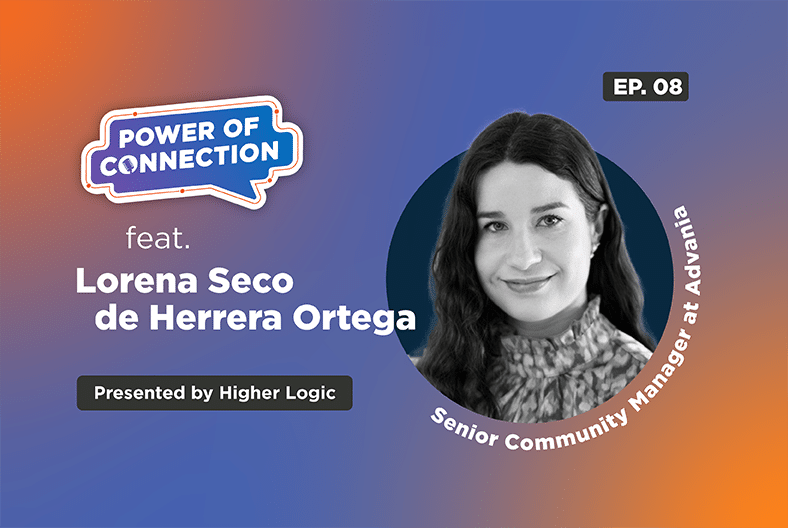
In this episode of The Power of Connection, host Paul Schneider talks with Lorena Seco de Herrera Ortega, Senior Community Manager at Advania, about how she’s using tools like ChatGPT and Copilot to extend what’s possible in Higher Logic Vanilla. From designing branded homepage tiles to building custom landing pages and experimenting with analytics, Lorena walks through how AI helps her work faster, test ideas, and bring new experiences to life without needing to be a developer.
Introduction to AI in Community Management
Paul Schneider:
Today, we’re going to discuss AI, artificial intelligence, but kind of in a unique way. So many of us are hearing about the uses of AI and how community vendors are putting AI to use in their platforms. But not a lot of people have heard about [platform users] taking AI and using it in their community to extend what they can do. And that’s exactly what we’re going to talk about here today. So, to help me with this discussion, I am very happy to welcome Lorena Seco de Herrera Ortega of Advania. Lorena, thanks for joining me today.
Lorena Seco de Herrera Ortega:
Thank you so much, Paul. Yeah, really excited to be here and to share a little bit more about what I’ve been doing in our community journey with AI and some of the things that I’ve been experimenting with.
Paul Schneider:
For those folks who haven’t heard about Advaniya, could you share a little bit about who they are as a company.
Lorena Seco de Herrera Ortega:
We are a large IT services provider across Nordics and also UK where I’m based. We essentially focus on helping organizations transform the way they work through technology. And we offer a wide range of products and services from cloud infrastructure and collaboration tools, managed services, quite a lot around digital transformation consulting as well. What makes us unique is that blend of technical depth and our people-first approach. We’re really looking forward to creating partnerships with our clients and the recently launched community is a testament to that as well.
Paul Schneider:
I love talking to community managers. I kind of have no idea how I fell into this space. It’s always interesting though to hear how people got into community management. How did you start doing this? How did you get into the community management industry?
Lorena Seco de Herrera Ortega:
Same for me. Like a lot of people in this space, I kind of fell into it. I started out in marketing and also some project management roles. And a few years ago, the opportunity came up to join a community management team in a B2B software company. At the time, I didn’t even know what that was about or didn’t even realize that community management was a job in itself. But just reading the description, it just ticked a lot of boxes for me.
So I thought, why not? And that was five years ago now. And I definitely found my industry. I’m sure very similar to a lot of other community managers, what I enjoy about the role is the variety, having something completely different each day and also the power to work across so many functions and to connect the dots in so many different ways.
Paul Schneider:
It’s a fun job. You get to work with people, which is always nice, but then get into their heads a little bit of what’s going to be interesting to them. How do we engage them? How do we provide them value? And it always seems to be something that’s evolving over time. It’s always interesting to hear how people actually got in into this space. Could you talk a little bit about the community? Because I know you’ve been doing a lot with it recently, but if you could give an overview of what the Advania community is like and some of the initiatives that you’re working on there.
Lorena Seco de Herrera Ortega:
We actually just launched less than a month ago now. So it’s something that I’ve been working on for the past few months, but only saw the light earlier this month. And it’s our new customer hub at its core. Essentially, it’s a space we’ve designed for our clients to connect with each other, share best practices, questions, engage with our experts, but also to tap into the expertise from other peers across the industry and other clients.
We also designed it to go beyond our products and services. So really want this space to be a valuable space for IT leaders more broadly, where they can stay up to date with everything going on in the industry and tap into that expertise and all the things that all the clients might be doing or the challenges that they might be facing beyond Advania.
It’s also a strategic channel for us to better listen to the voice of the customer. Some of the initiatives we’ve launched already are customer advisory boards to the community that was very successful. And now that the launch is out of the way, we are continuing to grow the experience. So I’m working at the moment to design a lot of exciting and fresh content with a lot of the expertise and SMEs that we have in the business, but also things like communication, events, feedback loops. It’s a way in a new space to have a lot more of a dynamic communication, channel communication with our clients and make it a core and engaging part of that customer experience.
Using AI for Community Customization
Paul Schneider:
I was excited in full disclosure when you all came on as a customer. And it was interesting. So you all were working and building the community. And then I saw this post on our success community. And it said, holy cow, you won’t believe what Lorena at Advania did. And they were talking about how you used AI to be able to do some theming and coding.
This is really what I think is super powerful and what I wanted to dive into today. Because a lot of people ask us how are you adding AI? And we’re doing great things. But there’s also things that you can do as a community manager or as an administrator of the site that has nothing necessarily to do with the platform provider.
What pushed you into thinking, gosh, I should just go in and use ChatGPT or whatever AI you use to be able to start coding. Tell us a little bit about what you did.
Lorena Seco de Herrera Ortega:
Design was always an important part of the community for me. So going into the launch, I wanted the community to have a polished look. I wanted it to align to the brand. I wanted it to look intuitive and be useful, but also to look cool and sleek.
This is a problem that I faced during my years in community management where eventually we have to turn to developer resources or maybe contract some third-party vendors that do this type of work for us if we didn’t have the expertise or the resources in house. So I knew what I wanted to get and it’s something that I’ve done in previous communities. But I’m a team of one at the moment and I knew we didn’t have that resource to count on.
I use AI generally in my day to day for a lot of different things. I had never used it for coding. So that’s really what prompted me. I just thought, maybe I can try a few prompts. I don’t know if ChatGPT, Copilot, or even our own private ChatGPT at Alvania can do anything with coding, but I just tried. I was very surprised with the results. I did take, back in the day, some styling courses. So I had a bit of an idea, but obviously I’m not a developer or anything, and it’s incredible to see what you can get with a combination of different tools. I’ve been able to create customizations and theming that I wouldn’t have been able to before at all, or that would have taken me ages, even if it was a very simple thing.
For example, some of the things that I’ve been able to do on the community when it comes to theming, think about things like completely customized call to action buttons or tiles across the homepage. They have a purpose as well, but they also look really cool. Think about hovering, fancy styling throughout, adding completely new elements to the community, but also editing those that are ready to make them match our brand and our style better. And things, for example, like completely customized a new landing page to direct customers the first time they see the community. There’s a lot that you can do.
I was also surprised to see that it got so much attention, I guess, in a way, because I thought that was something that more people would have tried before. I was definitely surprised with everything you can do and the community is live today. I would encourage anyone listening to go and check it out and see what I’m talking about and the things you can achieve with AI, because it’s really surprising.
Overcoming Challenges and Building Confidence with AI
Paul Schneider:
It is amazing. I have been playing around with it as well. I use it in my day to day as far as emails and things like that. But I am not a coder. I owned an online community software company back in the day, but they would never let me touch the code back then.
About two months ago, I wanted to be able to build a sales tool. And so for whatever reason, I said, well, let me just see if I can actually build this. I am not a coder. I went into ChatGPT, and I basically said, this is what I want to create. And it said, OK, if that’s what you want to create, then here’s all the things that you need. I said, great. Now remember, I’m not a coder, but walk me through how I would actually do this. And it told me to go and set up your file structure and get an account here, get an account there, and then hook these things up. And it was absolutely amazing what I was able to accomplish in two afternoons.
What people don’t understand is that it can absolutely be scary to think, gosh, I’m going to go into the coding lines and I’m going to put code in there. Well, one, you have a staging environment. So most platforms out there will give you the ability to be able to do that and play without breaking anything. But it’s not that hard, especially when it’s like sitting down with a coder and saying, hey, here’s what I want to create, write the code, and it writes the code for you, and then you just cut and paste it into wherever you need to put it. It is so much easier than people think.
From your perspective, was it easier than you thought as you got into it?
Lorena Seco de Herrera Ortega:
100%, especially because I had some context of me trying to achieve similar things before without AI. I knew how long that took. I knew that a lot of the times it was a fail or a lot of the times it would break all the things. I was honestly very surprised to see that result. Of course, it did involve some trial and error, but even when you don’t get what you need or when the outcome is not what you were expecting, AI is really good at helping you find the issue and solve it. It’s really good at debugging. Once I had a basic version of anything and it was working, then you can take it to the next level.
It offers a lot of possibilities and things like giving as much information as possible or using the right prompts are definitely useful. But it’s also important to remember that you’re building that memory as well. So the more I did it, the less information I had to give. I would just use really basic things to build those prompts as well. From what you’re trying to get visually and providing some pictures of something you might have seen on other communities or somewhere and you want to create a look and feel that is similar to also describing how you’re going to be injecting that code on Higher Logic Vanilla in this case. Those are things to consider.
But I would say the trickiest customization that took me the longest would be a space of two days. During those two days, I would dedicate like one hour or two per day on looking at it, and that was for really tricky ones. But once you crack something, then you can really take it to the next level and apply in a lot of different use cases and locations as well.
Paul Schneider:
I find it gets addicting. You’re like, wow, well, if I can do that, I wonder what else I can do. Are you looking at other things that you can do now in your community using AI?
Lorena Seco de Herrera Ortega:
100%. At the beginning, as I said, I did use AI a lot, but more for personal use. I would use it for work related stuff, like you mentioned emails or that type of thing, but not from a community mindset. Whereas this coding experience has really made me think about what else can we do with AI? When we look at it from the coding perspective, the latest thing I’ve done, for example, was creating a landing page for our groups. That is something, I wouldn’t have been able to.
Outside of coding, there’s a lot that can be done right now. I’m looking into analytics quite a lot, because we just launched the community. So now we want to start looking at those analytics, how is it performing, what are the things we need to pay more attention to and how can we prove the value as well long term.
There are lot of things that you can only get through the API. That’s where it gets a bit technical. So again, I’m trying to use AI to extract that information, dissect it in a way that makes sense for me and convert it in a file format that I can read, but also make it digestible to then include it in a report, for example or take the data points that we want to tell the story about. Analytics is something I want to focus more on for sure. It’s great to leverage in a lot of different comms exercises. Being community manager and a team of one, you have to communicate quite a lot. It’s great to come up with that type of content as well.
Also thinking about strategy, I’ve been using it quite a lot lately. I found it a great partner to bounce ideas off when thinking about strategy and really helps you see the pros and cons. Obviously you make the decision and it’s not always perfect, but I feel like it really helps me because again, I’m a team of one. It really helps me see that bigger picture as well.
Paul Schneider:
That team of one is something that a lot of community managers can relate to because most of them are a team of one. And you now have a team of however many you need with AI. It was interesting. You did this one thing, and really to help yourself. But then you started to get some notoriety in the industry. People are asking you to come speak about this, and you’re becoming a bit of an expert. Tell us a little bit about what this has led to.
Lorena Seco de Herrera Ortega:
That is so true and definitely that imposter syndrome is kicking because I was like, well, this shouldn’t be that groundbreaking. It really surprised me how much attention it got because I thought surely someone has tried this already or they’re doing that already. It just really opened up the conversation and since I posted about it on the on the Higher Logic Vanilla community, I got quite a lot of comments on the post that then led to conversations with community managers also across LinkedIn where it’s just really interesting to hear what people are doing with AI. We’re talking about it today in the podcast, and also you can share that expertise in those use cases. I also got invitations for some of the webinars, also speaking at the London Community Week event hosted by LedBy communities.
It’s something that a lot of us haven’t tapped into yet, maybe because we’re too busy with the day-to-day and we see it as this big thing that we don’t want to touch.
Paul Schneider:
That leads me to my last question, because there’s probably a lot of community managers listening to this thinking, huh, maybe this is something I should look into. But a lot of people are just scared, especially if you’ve never coded before.
If you had any advice that you could give to somebody that’s listening, as a community manager, that’s thinking, maybe I should dip my toe in the water on this, what advice would you have for them?
Lorena Seco de Herrera Ortega:
Don’t be afraid. There’s nothing bad that can happen out of this. Some of these we’ve mentioned like staging sites, probably smart to try those things first there so that you don’t break anything. Thinking about those prompts, you’re going to give it. And starting small. I realized the extent of the things I could do as I got into it. At the beginning, I just started with something really small that I wanted to add or change, something like a button, for example, and then it would get you there one way or another. So start small.
If you’re not sure about what you can do with AI, also ask AI, which is something that I’ve been doing lately as well. It helps you think out of the box, not only what you can do with coding, but outside of coding with AI.
It’s also important to share it. This has taught me that we are curious, and we want to know more about it, but not a lot of people have actually gone and done it. It’s really useful to hear these types of experiences and use cases to get other people started and to get the conversation started. I would say that even if you think something is small, it’s worth sharing that.
Paul Schneider:
Yeah, that last point is absolutely on track. It’s new for everybody. If you do something and maybe you don’t even think it’s that big of a deal, share it. Because to somebody else, it is going to be a big deal.
Lorena, this has been a fantastic episode. Thank you so much for joining us. This has been a great conversation. And thank you for joining us on the Higher Logic Power of Connection podcast.
Subscribe to The Power of Connection wherever you get your podcasts to hear more stories from community leaders.