


When Customers Become the Teachers: How Bluebeam Scaled Education by Tapping Into Community Knowledge
Creating a flexible product is great, but when every customer uses it differently, it becomes nearly impossible to cover every use case. For Bluebeam, a leading construction software for AEC teams, the answer wasnt churning out endless how-tosit was building a customer community.
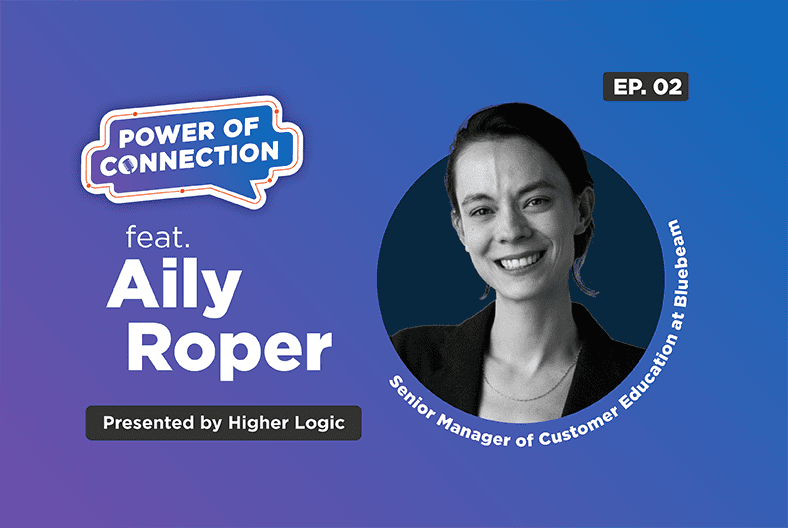
In Power of Connection podcast, Aily Roper, Senior Manager of Customer Education at Bluebeam, shares how they created a space for their users to connect, collaborate, and learn from each other. As a result, the community has now become a go-to resource, helping users discover new ways to get the most out of the software.
Heres what you can take away from their approach.
Note: Elements of this interview have been lightly edited for concision and clarity.
The Shift to Customer Education at Bluebeam
When Aily joined Bluebeam, the company was navigating a major shift from a perpetual license model to a SaaS subscription. This transition meant rethinking how they connected with customers, from focusing on pre-sale efforts to prioritizing long-term success and retention. It put the spotlight on onboarding, and self-service became key to helping users get started fast.
Given Bluebeams robust, feature-rich platform, user education was essential. The products intuitive design was a big help here. A lot of users love that they can dive in on day one with the basics, Aily shared, but to fully integrate Bluebeam into their daily workflows, they needed a deeper level of education.
Then came a wake-up call: a utilization report showed that most customers were only using a small fraction of Bluebeams features. Our users loved the product, but they were barely scratching the surface, Aily said.
Recognizing this gap, Bluebeam bundled access to Bluebeam University into its SaaS offering, making learning resources free and adding in-app tutorials to improve feature discovery. For SaaS, maximizing value, retaining users, and driving adoption are core goals, Aily added. We had to evolve our approach.
When One Size Doesnt Fit All
Even with a comprehensive education program in place, Aily realized there was a gap. She found that users had highly specific workflow needs. Customers were personalizing Bluebeam to their processes and needed insights for their exact scenarios, she explained. But we couldnt create a course for every use case, even though those niche cases mattered.
Then inspiration struck: Bluebeams customers were becoming experts in their own workflows. Why not give them a space to share their knowledge with each other? Thats when I had the idea for the Bluebeam Community, Aily said. “Our customers could teach each other in ways we simply couldnt. The community also became a way to reach customers without a dedicated CSM. “The community did for them what our CSMs do for enterprise clients,” she said.
On a personal level, Ailys background as a K-12 educator gave her a unique perspective on the communitys value. “Learning is social,” she said. “Its not just about formal training; its about people sharing what works for them. Their customers needed a space where they could help each other and actively engage, not just passively learn.
Making the Case for Bluebeams Community
The idea of launching a customer community was exciting, but Aily knew executive buy-in would require clear alignment with Bluebeams top priorities. I had to get inside the executives heads, she explained. I knew they were looking at those top-line metrics.
To make a strong case, Aily leaned on research. I did a lot of reading on community before I jumped in, she explained. One of the most helpful frameworks I found was in Building Brand Communities, which introduced the SPACES modela way to map community KPIs to different departments. This model allowed her to approach each department head with a customized pitch, showing how a community would directly benefit their objectives.
With departmental backing secured, Aily brought the proposal to the executive team, supported by data and a clear path to ROI. I framed the ROI as a percentage rather than a dollar amount, and that resonated. It changed the conversation, she recalled. The impact was immediate: by years end, Bluebeams executives not only gave the green light but also allocated a budget for a full-scale community launch.
Soon, the community became a top priority, with funding in place even before the next fiscal year. Our executives were saying, Community is the most important thing were doing next year, and we need to get started now, Aily shared. By early 2024, the Bluebeam Community was livealready adding value across teams and setting the stage for deeper customer engagement.
Building a Customer-Driven Community
When it came to creating the community, Bluebeam kept it simple: they went straight to the source and asked customers what they needed. Sometimes we fall into this habit of assuming what our customers want, Aily explained. But its so simplejust ask them. You have access to them. Use Salesforce. Find your customers and ask what they need.
For the launch, they strategized to build momentum by first inviting members of Bluebeams user groupsthose most engaged with the product. We wanted to give our biggest power users an exclusive feel and a chance to help us refine the community before opening it to a wider audience, Aily said. By encouraging early members to initiate discussions, share workflows, and contribute industry insights, Bluebeams most experienced users effectively laid the foundation for a collaborative, engaged community culture.
The pre-launch activity proved invaluable. I didnt realize just how critical it would be to have them build the culture themselves, Aily reflected. Watching them share insights, support each other, and shape the community was eye-opening. It became clear that this was theirs, not ours.
Just five months in, the communitys impact speaks for itself: Bluebeam surpassed its year-end membership goal, reaching nearly 4,000 members within a single quarter. What began as a vision for peer-led learning quickly evolved into an active community. Bluebeams customers werent just users; they had become advocates, driving the platform forward and supporting each other every step of the way.
Reflecting on the experience, Aily shared: Getting to know our members has been really fun for me. Through the community, I get a daily view into their work lives in a way Ive never experienced before.
How Bluebeams Community Drives Product Innovation
Beyond new user registrations, one of the standout successes within Bluebeams community has been its product feedback hub, where customer insights flow in with a level of detail that reflects their deep expertise. Our customers are the experts, Aily shared. Seeing the ideas they come up with, how highly specific and thought-through they are. Its been incredible. The nature of Bluebeams customersbuilders, architects, and engineersmakes them ideal participants in a peer-to-peer environment. The AEC industry is full of natural problem solvers, Aily observed. They love to tinker, reverse-engineer, and solve complex challenges. Its the perfect mindset for a community like ours.
This problem-solving culture has translated seamlessly into the community, where members frequently answer each others questions. One of our big wins has been peer-to-peer knowledge sharing, Aily explained. We hardly answer questions anymore because our members are stepping in to help one another. Its amazing to watch them collaborate and share workarounds.
The feedback hub has also been a revelation for the entire company. Seeing what customers actually want has been huge, both for our education efforts and for the company as a whole, she said. Bluebeams product team has embraced this channel, committing to responding directly to user suggestions whenever possible. Aily added: Weve set ground rules with our product managers: if they want to use the feedback, they need to engage. Responses should come directly from the product team, so customers feel heard.
This approach has resonated. Weve had customers express their gratitude, saying things like, Wow, Im really grateful that you all are listening, and its clear you care about us, said Aily.
Recently, Bluebeam even released several features directly based on community feedbackDark Mode, a highly requested addition, being one of them. Going back to the community and saying, Hey, this has actually just been released. Check it out! sparked a wave of positivity, Aily said. The comments were fantastic. Users were cheering us on, saying, Go Bluebeam!
For Aily and her team, the link between community input and product development has been invigorating. Our goal is to make our customers work easier, she reflected. Being part of that journey and seeing the success our community has created for our product department has been incredibly rewarding.
Join the full conversation
To hear more of Ailys journey to scaling customer education through community, subscribe and catch the full episode.